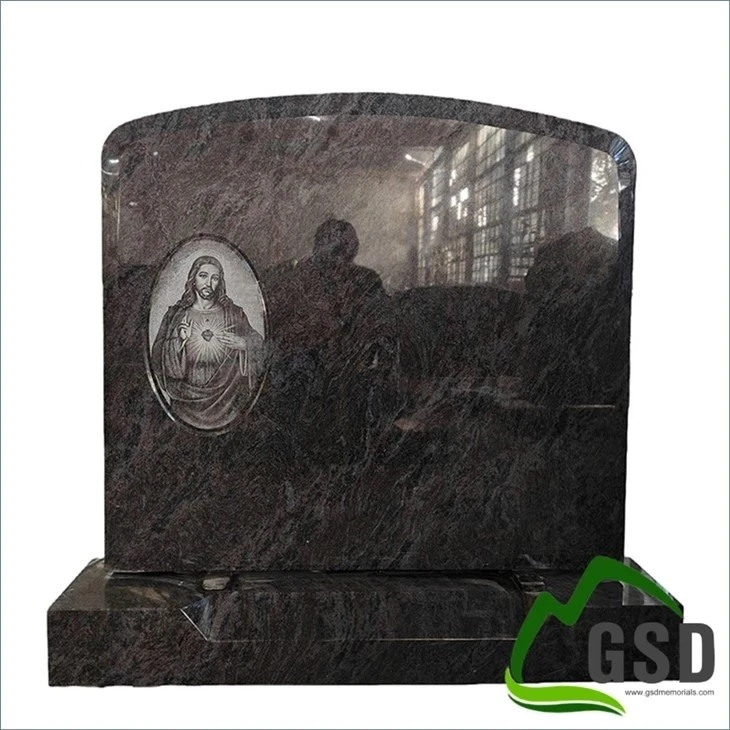
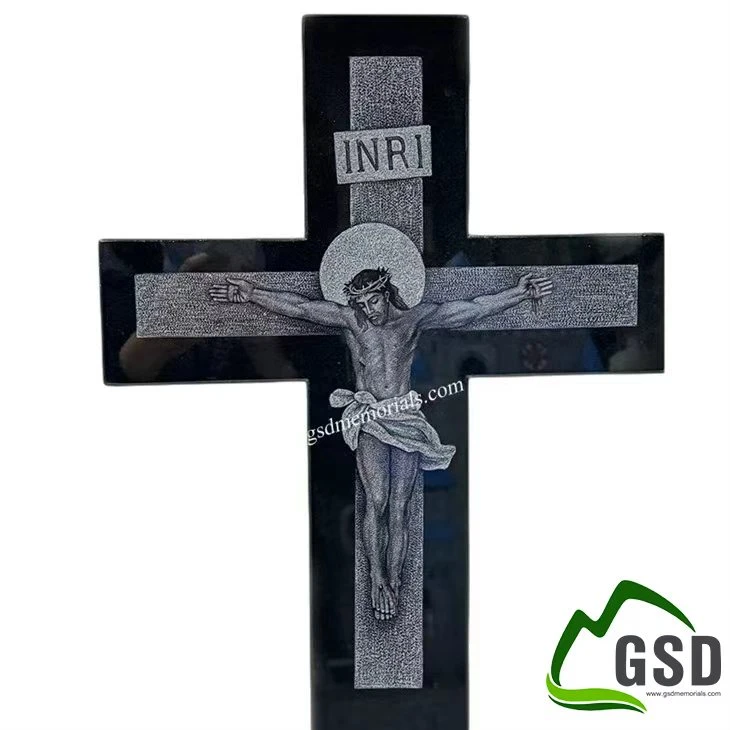
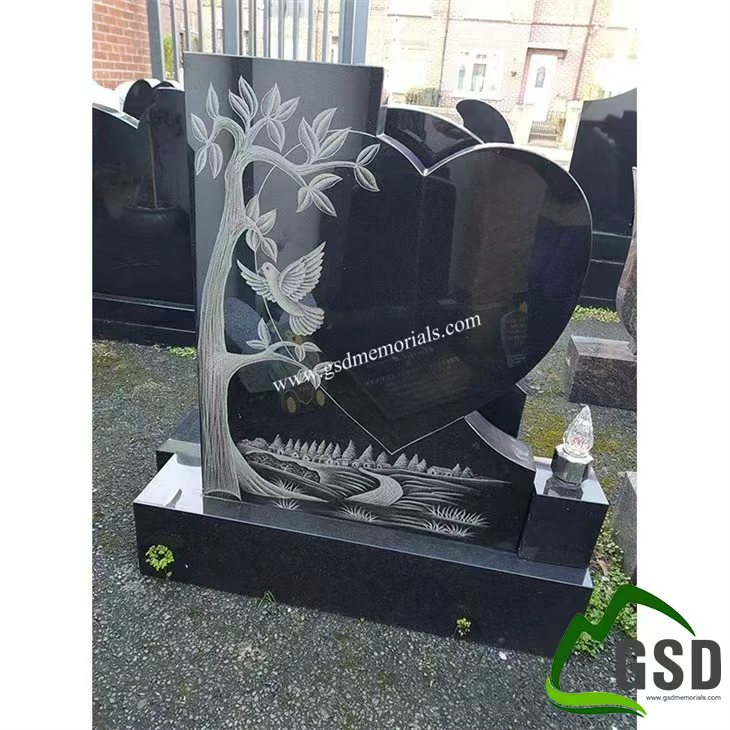
Pneumatic hammer stone detailing and laser engraving produce different surface structures on granite monuments. Hand pneumatic carving removes stone to create physical relief, while laser engraving modifies the surface to reproduce portraits, lettering and fine tonal details. The appropriate method depends on grain structure, required depth, image contrast and final surface finish.
1. Mechanical Principles of Pneumatic Hammer Stone Detailing
Pneumatic carving uses compressed air to drive a reciprocating piston that strikes a steel or carbide-tipped tool. The cutting edge removes small stone fragments through repeated impact. Tool selection, air pressure, impact frequency and operator control determine the removal rate and surface texture.
Typical production controls include:
- Tool selection: Use pointed chisels for rough shaping, flat chisels for surface reduction and fine-point tools for detailed contours.
- Air pressure: Set operating pressure according to the pneumatic tool specification and granite hardness. Avoid using one pressure setting for every stone type.
- Impact control: Reduce impact intensity near thin edges, narrow projections and previously carved details.
- Stone inspection: Check grain consistency and visible fissures before carving. Reject blocks with structural cracks in detailed areas.
- Sample approval: Produce a test section to confirm texture, depth and edge definition before full production.
Hand pneumatic carving is suitable for sculpted lettering, floral reliefs, ornamental borders and complex figurative details that require physical depth.
2. Precision Depth Control in Hand Sculpted Reliefs
Relief carving requires controlled depth transitions between raised and recessed areas. Excessive material removal can weaken narrow stone sections, while insufficient depth reduces shadow definition and visual separation.
For custom granite monuments, CAD drawings should identify relief boundaries, reference dimensions and critical depth changes before carving. Three-dimensional references can help operators assess facial projections, folded fabric, leaves and other undercut features.
Contrast and Permanence Comparison with Laser Engraved Surfaces
Laser engraving uses concentrated energy to alter the granite surface and create tonal variation. It is suitable for photographic portraits, fine lettering and detailed images that are difficult to reproduce through impact carving.
The two processes differ in depth, appearance and maintenance requirements.
Laser engraving quality depends on granite mineral composition, surface finish, image resolution and laser settings. Test samples should be approved before processing the final monument. Both methods require suitable stone selection and correct production control for long-term outdoor use.
3. Combining Pneumatic Carving with High Gloss Polished Backgrounds
Combining hand pneumatic carving with high-gloss polished granite creates contrast between textured relief and reflective background surfaces. The sequence of operations must be defined before production to avoid damage to finished areas.
Recommended controls include:
- Complete CAD approval before CNC cutting, carving or Laser etching.
- Machine the main slab dimensions before detailed hand carving.
- Protect polished surfaces during pneumatic hammer operations.
- Keep carving boundaries consistent with the approved artwork.
- Inspect polished backgrounds for scratches, uneven reflections and tool impact marks.
- Confirm that water and cleaning residues can drain from recessed details.
If you need to learn about photo monuments and granite carving designs, you can check out our Etching Memorials series website, let us know your needs, and we will provide you with the necessary services.
https://www.gsdmemorials.com/etching-memorials/